Eight steps, one table, and a twist nobody sees coming.
ethixCube is a physical card and cube game before it is anything else. The case you can play here on your own is the same eight steps with the three that need other people taken out.
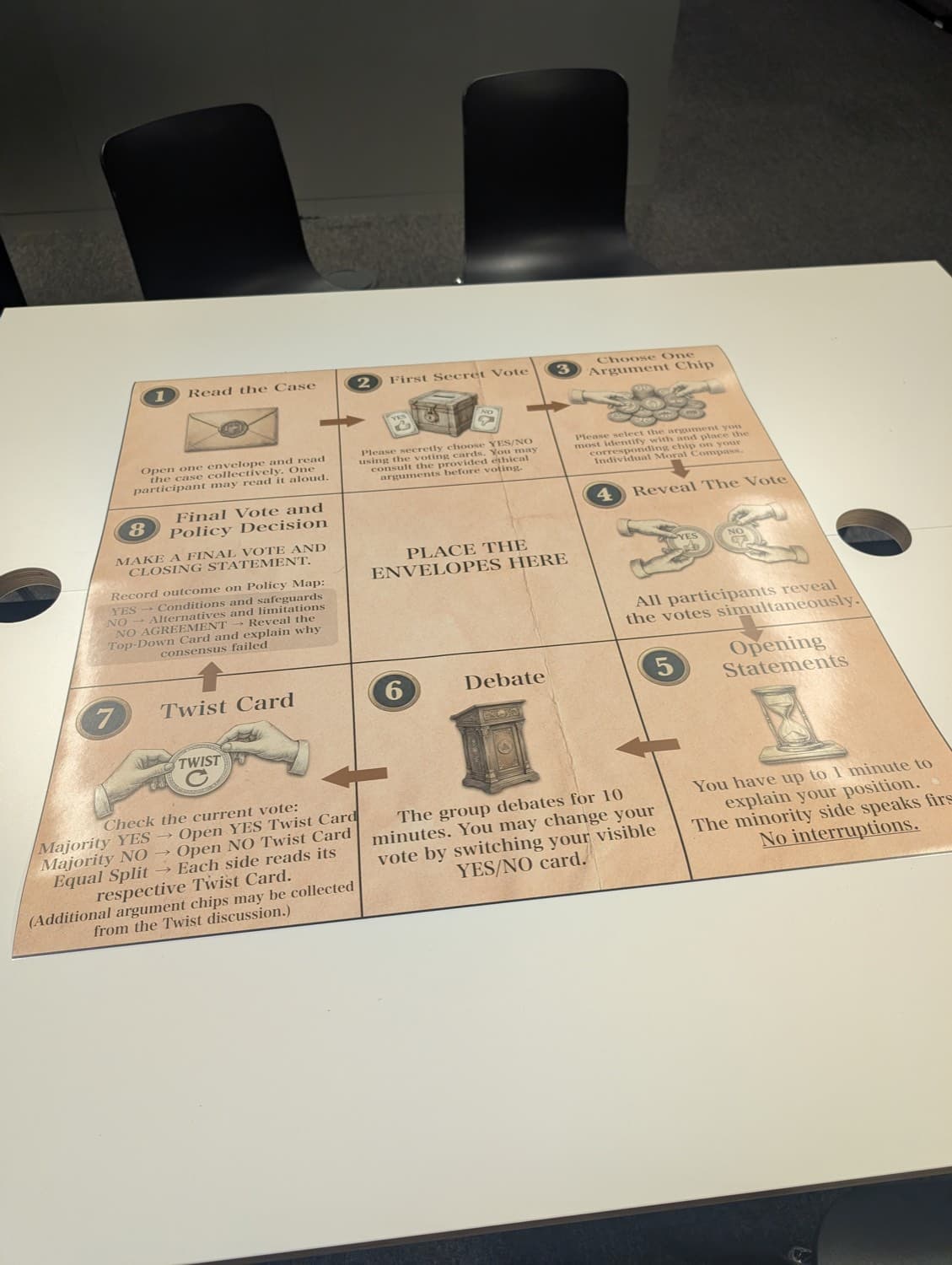
Eight steps, as printed on the board.
A case played on your own runs five of them. The other three need other people in the room, which is what a hosted session is for.
- 1Read the caseon your ownOpen the envelope. Read the case, and the possible responses on the back.
- 2Cast your secret voteon your ownChoose yes or no and place your card face down. Then, without revealing it, find the coloured answer closest to your reason and take a cube in that colour. You commit to a reason, not just a side.
- 3Revealneeds a roomTurn over your vote cards. Which side has the majority?
- 4State your caseneeds a roomOne minute each to explain your vote. Minority voters speak first, and there are no interruptions.
- 5Debateon your ownTen minutes. You may change your vote at any time. Stay alert: the facilitator may introduce a twist.
- 6Final decisionon your ownCast your final vote. It may stay the same or change, and either is fine. Take a second cube for your final reasoning.
- 7Build consensusneeds a roomConsensus is reached when everyone agrees, with the exception of at most one player. Fail, and the group defaults to the less-desirable top-down card. Failing to agree is not neutral.
- 8Record the outcome on the policy mapon your ownConsensus yes, consensus no, or no consensus. Then the group's policy: any principles, conditions, safeguards, exceptions, alternatives or implementation measures that emerged in the discussion.
Five objects, and each of them does one job.
The board
Every session moves from dilemma to policy in one sitting. The board carries the group through the cycle of ethical deliberation: dilemma, intuition, deliberation, collective judgement, informed action.
The cubes
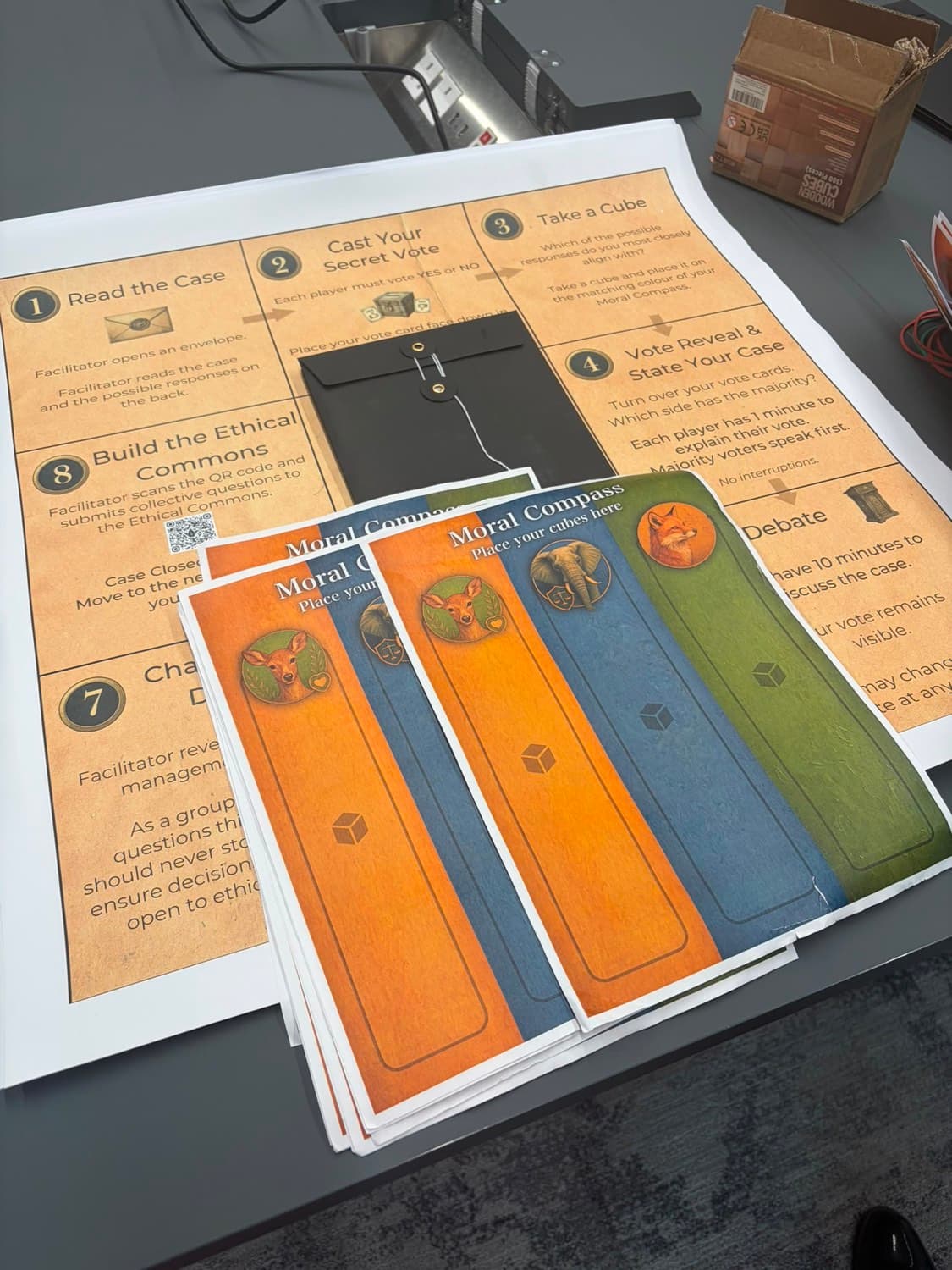
After a secret vote, each player picks up a coloured cube representing the kind of moral reasoning behind their choice. Outcomes and impact, principles and duties, or character and virtues. A second cube goes down at the end, for whatever the argument left them thinking. The room sees the reasoning, not just the result.
The cards
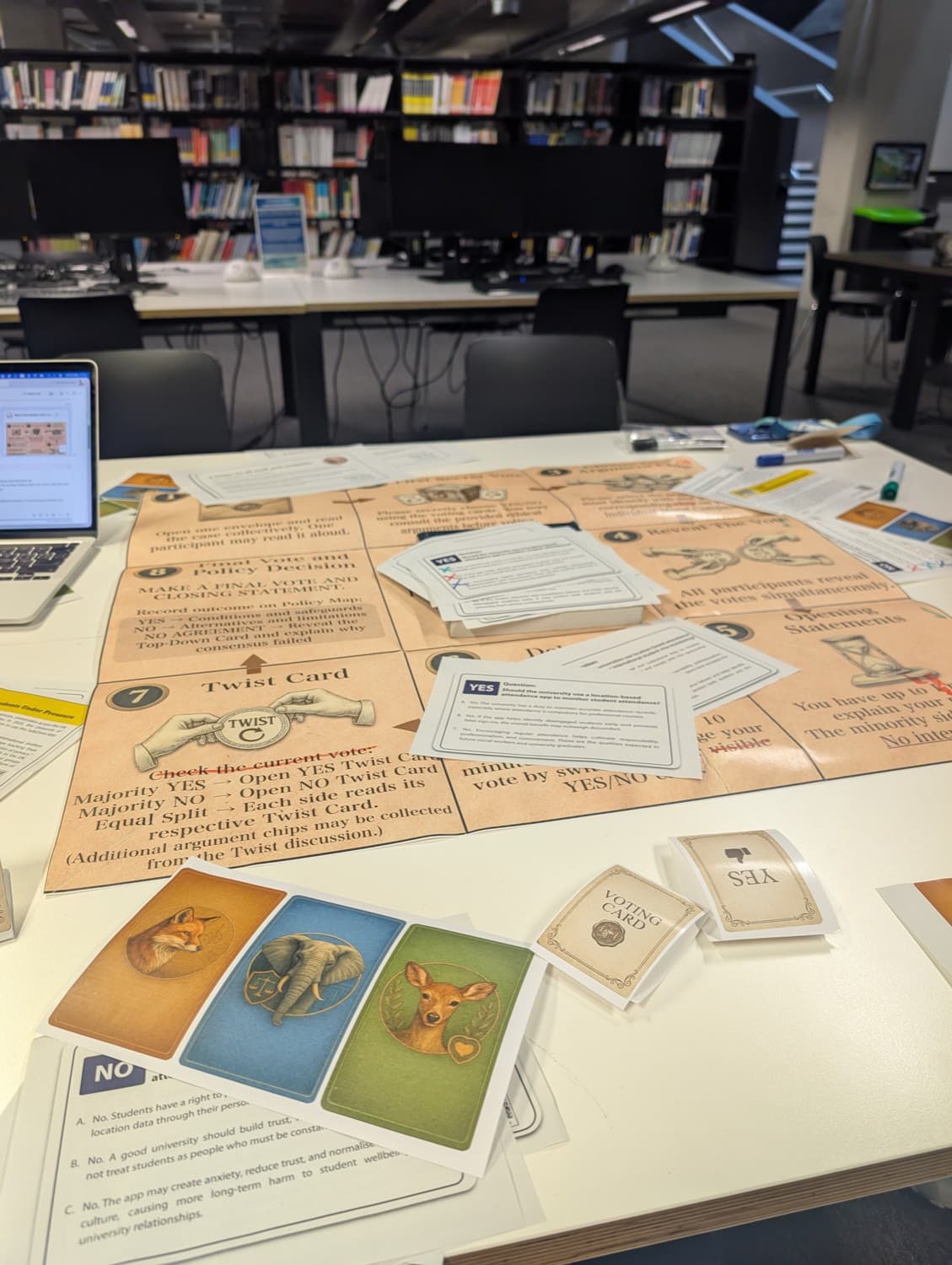
A case unfolds across three card types: case cards present a realistic dilemma and its decision question, twist cards introduce new evidence mid-discussion, and the top-down card delivers a senior leadership decision that reframes the debate.
The lenses
Throughout the game, players build a Moral Compass by recording the reasons behind their choices. While most people draw on multiple ethical lenses, certain patterns often emerge.
The twist
Just as positions settle, the twist lands. New evidence arrives, the group votes again, and everyone sees how far the discussion moved them from their first intuition.
Find out how you actually reason.
One case or four, about five minutes each, and a name at the end. No account needed.