How a philosophy problem became a box of cards.
The story in Lucien von Schomberg's own published words. Sentences are selected, never rewritten.
Foundations in Philosophy Education
The origins of the project go back to my time as a PhD researcher and lecturer in philosophy at Wageningen University & Research. At Wageningen, known for its strong life sciences focus, the challenge was to make philosophy relevant to students with little or no background in the subject. Together with Professor Marcel Verweij, then chair of the philosophy group, we designed an ethics board game as part of the MSc module Philosophy and Ethics of Management, Economics, and Consumer Behaviour.
The idea was simple. Students sat around a deck of cards, each presenting a real-world dilemma. These included questions such as whether an intern on their first day should report a manager making racist remarks, whether Meta should remove misleading content at the cost of restricting free speech, or whether a company should prioritise shareholder profit over sustainability measures that lower returns.
Traditional ethics education often begins with abstract theory before moving to practical application. For many students, this can feel distant and inaccessible. The ethixCube™ instead begins with practice: concrete dilemmas that surface intuitions, disagreement, uncertainty, and dialogue before introducing ethical frameworks.
Inspired by Paulo Freire’s critique of the “banking model” of education and supported by research on game-based learning, the approach encourages participants to actively construct ethical understanding together rather than passively receive information.
The project began not as a finished product, but as an experiment in making ethics more accessible, collaborative, and meaningful.
Each card offered responses linked to a major ethical theory:
- consequence-based reasoning
- duty-based reasoning
- character-based reasoning
The aim was not to win, but to reason together.
No photography of the original Wageningen card game survives in the project archive. This era is told in words only.
Reinvention Through Design
A few years later, I began teaching Business Ethics at Greenwich Business School to over 400 undergraduate students across multiple programmes. I wanted to bring the game into this new context and push the concept further.
With support from Scholarship Excellence in Business Education (SEBE), I partnered with the School of Design and then Head of School Anastasios Maragiannis to rethink the project visually and materially.
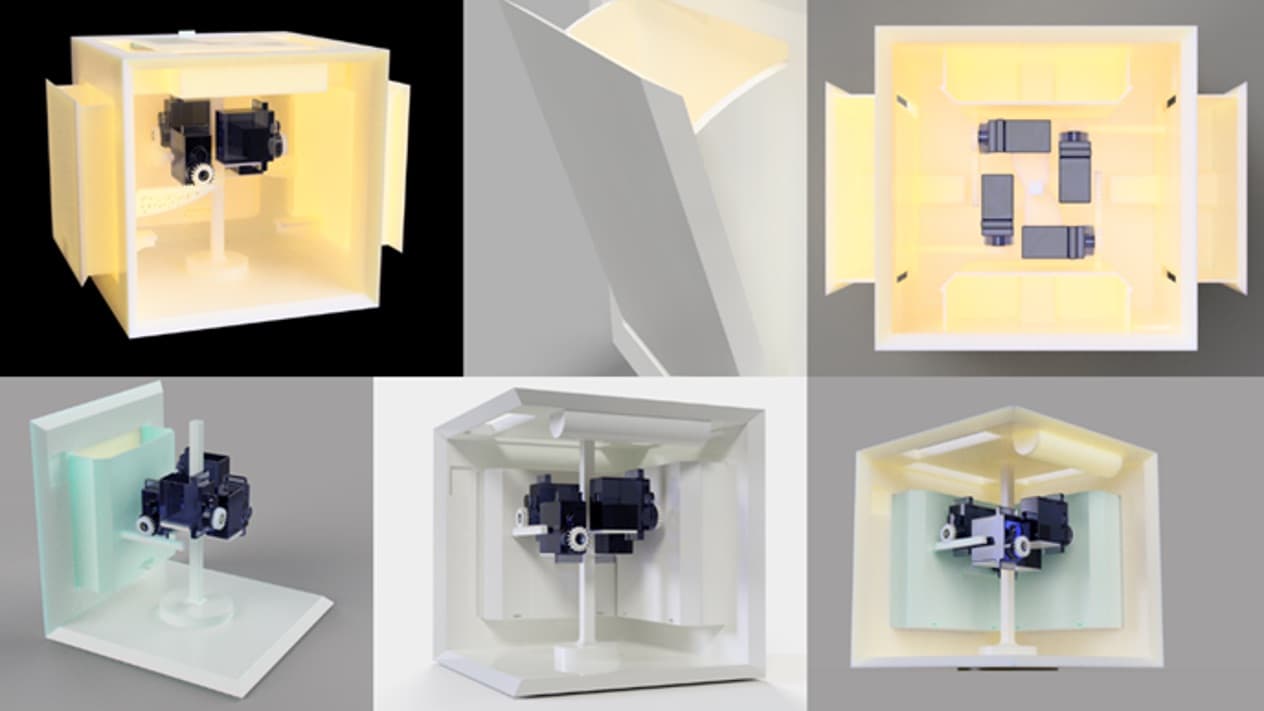
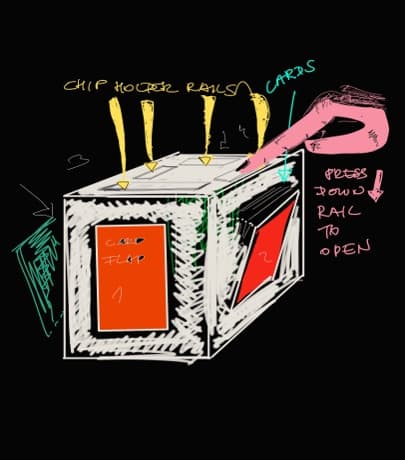
MA Digital Design alumnus Andreas Arany-Toth, through his social enterprise Design Dynamo, proposed transforming the original card-based activity into a tactile cube: something physical, interactive, and “spinnable”. Through this collaboration, MSc Product Design Engineering alumnus Surendrakumar Jayasuriyan helped develop the first working prototype.
The transition from a flat board game to a three-dimensional object opened entirely new possibilities. The project also began experimenting with ethical reasoning tokens linked to different moral traditions. Over time, players could reflect on the kinds of reasoning patterns emerging within their own decisions.
To further develop the concept, co-creation workshops were held at the University of Greenwich and the University of Westminster involving students, academics, designers, and professionals from different sectors. These workshops generated ideas ranging from finance-focused versions proposed by J.P. Morgan representatives to digitally connected formats capable of comparing ethical reasoning across organisations and international teams.
The workshops also revealed something important: people were not simply discussing ethics, they were actively negotiating disagreement, questioning assumptions, and collectively constructing responses to difficult situations in real time.
The aim was not simply to discuss ethics, but to make ethical reasoning visible.
Scaling Through Research & Partnerships
As the project grew, the focus shifted toward developing richer content, broader institutional engagement, and scalable formats.
With support from NUSC funding, and in collaboration with Dr Guodong Cheng, Dr Jiawei Li, and Dr Grace O’Rourke, the project recruited research assistants to help build a structured database of real-world ethical dilemmas supported by articles, videos, references, and thematic categorisation. Each case card now included QR codes linking participants to deeper contextual material.
The ethixCube™ became embedded within Business Ethics teaching at Greenwich, where students first engaged with ethical dilemmas as participants before later designing and facilitating their own cases.
The project also expanded into postgraduate education, transnational education partnerships in Vietnam and Malaysia, and interdisciplinary teaching contexts.
A growing network of ethixCube™ Student Ambassadors began contributing to:
- facilitation
- testing
- dissemination
- workshop delivery
- research and development
What began as a classroom experiment evolved into an internationally funded ethics education and engagement initiative.

What Comes Next?
Future adaptations may explore immersive and AI-supported ethics facilitation, including augmented and hybrid formats.
For now, the priority remains simple: keep testing the cube in new contexts and continue building a community capable of adapting ethical deliberation to real-world decisions.
The next phase of ethixCube™ focuses on:
- digital and hybrid formats
- organisational ethics workshops
- responsible AI and digitalisation
- international partnerships
- student-led co-creation
- scalable ethical deliberation tools
Find out how you actually reason.
One case or four, about five minutes each, and a name at the end. No account needed.