Make ethical decision-making visible.
ethixCube™ is a facilitated game and workshop method for the ethical decisions that policies alone cannot settle. Participants work through realistic dilemmas, vote privately, explain their reasoning and learn through structured disagreement.
Developed through research, funding and pilots with

Development and research
BRIDGE project partner

GEPPIE project partner

Organisational pilot

Upcoming organisational pilot

Funder

Funder, REINFORCING
See how ethics is lived across your organisation.
Policies state what should happen. ethixCube shows how people interpret difficult situations when responsibilities, consequences and relationships pull in different directions.
See how you reason
Each choice connects to an ethical lens. Participants receive a personal Ethics Profile showing the patterns in their reasoning and how these may differ from other perspectives.
Make disagreement discussable
Private voting brings minority views and unexpected differences to the surface. Facilitated dialogue helps people explain, test and revise their positions.
Learn from lived experience
Leaders hear how ethical pressures are experienced across roles, teams and contexts.
Capture what matters next
The session records the priorities, safeguards, conditions and unresolved questions that participants believe the organisation should consider.
One dilemma. Different positions. A better conversation.
- 1
Encounter a real dilemma
Start with a realistic decision in which important values and responsibilities conflict.
- 2
Choose privately
Vote before the discussion and identify the reasoning behind your choice.
- 3
Explain and challenge
Hear different perspectives, test assumptions and respond to new information.
- 4
Reflect together
Compare how positions changed and capture points of alignment, disagreement and further action.
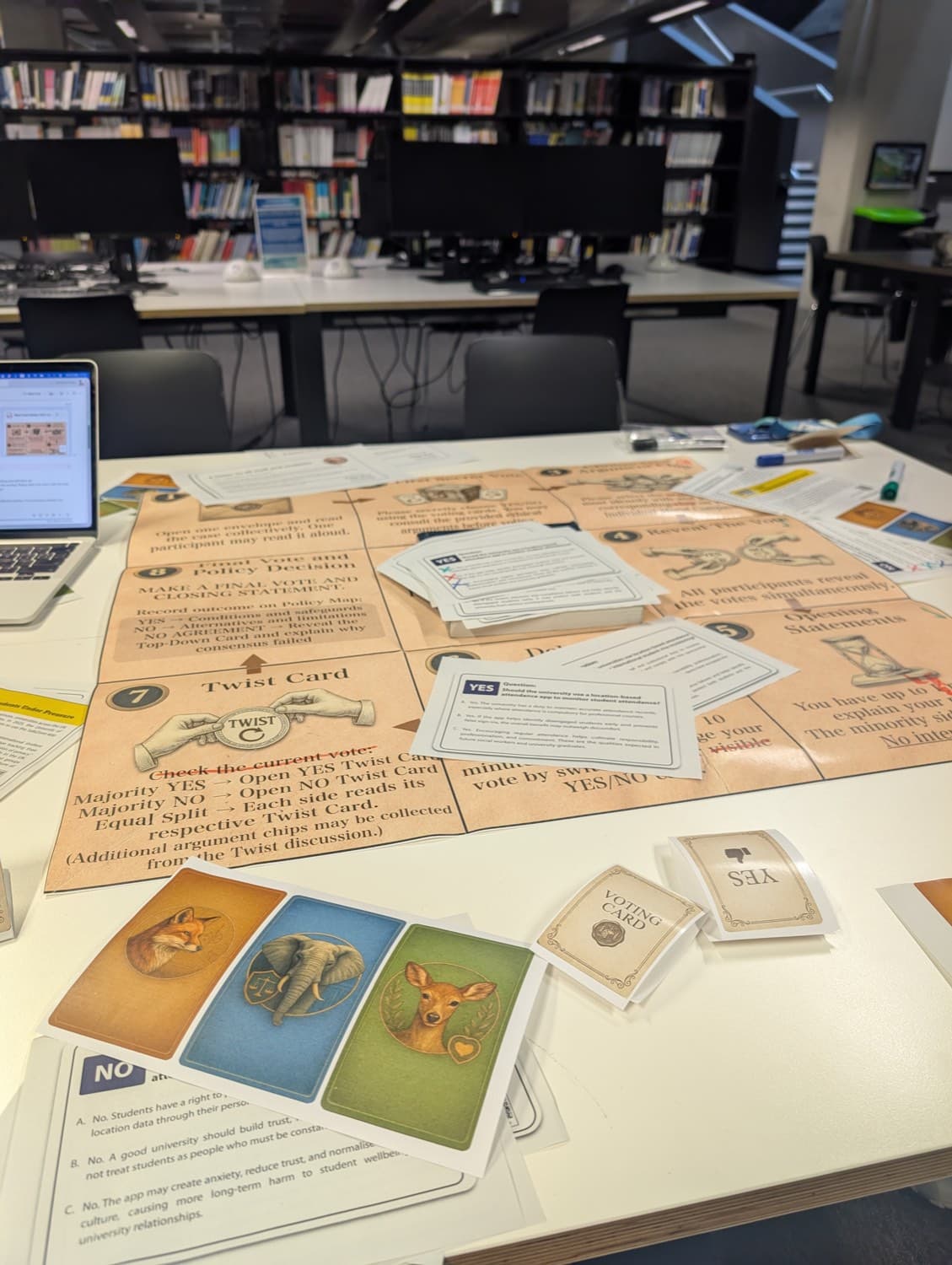
Analogue, digital or blended.
Analogue ethixCube
A tactile, facilitator-led experience using dilemma cards, private vote cards, coloured cubes and a shared board. Best for in-person team, leadership, board and conference sessions.
Digital ethixCube
A browser-based version for individual demos, live online workshops, remote teams and larger groups. Participants use their own device while the facilitator guides the shared discussion.
Workshops can combine analogue discussion with digital voting and group-level outputs. The format should follow the audience, location and purpose.
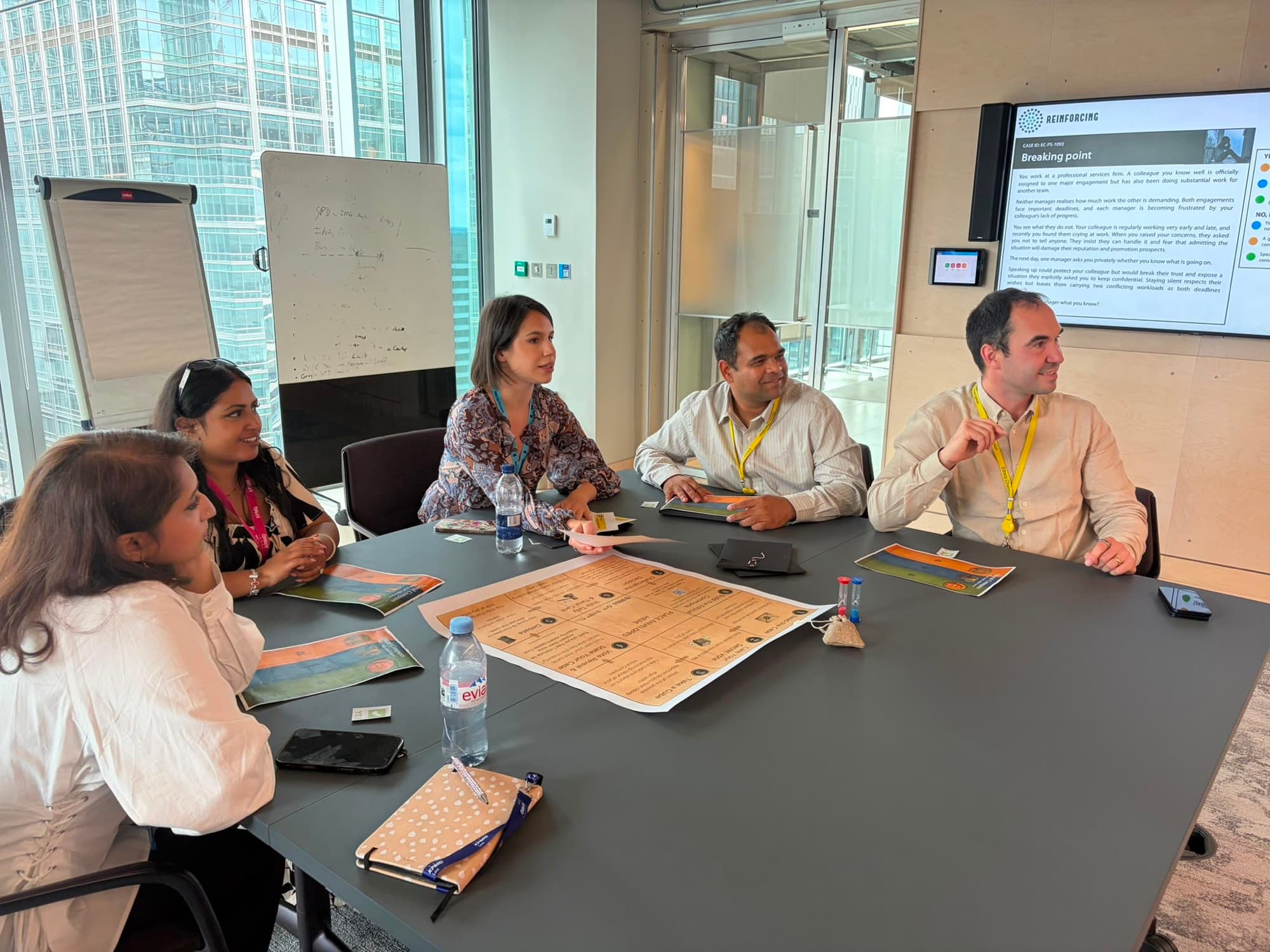
The KPMG pilot changed how participants viewed ethics.
Participants used tailored corporate dilemmas, private voting, facilitated discussion and new information designed to test emerging agreement.
100%
of participants (21/21) reported at least some change in how they viewed ethics.
67%
reported a moderate or significant change.
Source: post-workshop feedback, KPMG pilot, London, July 2026, n=21.
Work on the ethical decisions your people already face.
Choose from our growing dilemma library or work with us to develop scenarios around your organisation's policies, pressures and culture.
- AI and digital ethics
- Speak-up and psychological safety
- Conflicts of interest
- Gifts, hospitality and influence
- Responsible innovation
- Sustainability and competing priorities
- Business and human rights
- Leadership and accountability
Dilemmas can be developed with your team, reviewed by relevant internal experts and adapted to different roles or levels of seniority.
Help build the world's largest interactive database of ethical dilemmas.
Our long-term goal is to create a research-informed, interactive database that helps people examine ethical decisions across sectors and cultures. Organisational cases remain confidential unless there is explicit permission to share an anonymised version.
Research-led. Built for practice.
ethixCube began as a university research and teaching innovation. Organisations can now commission workshops, facilitation and tailored dilemmas, while funded projects at the University of Greenwich continue to test and extend the method in new settings.
What ethical decision does your organisation need to discuss?
Tell us about the audience, challenge and outcome you have in mind. We will suggest a format and set of dilemmas for the session.