From private judgement to shared understanding.
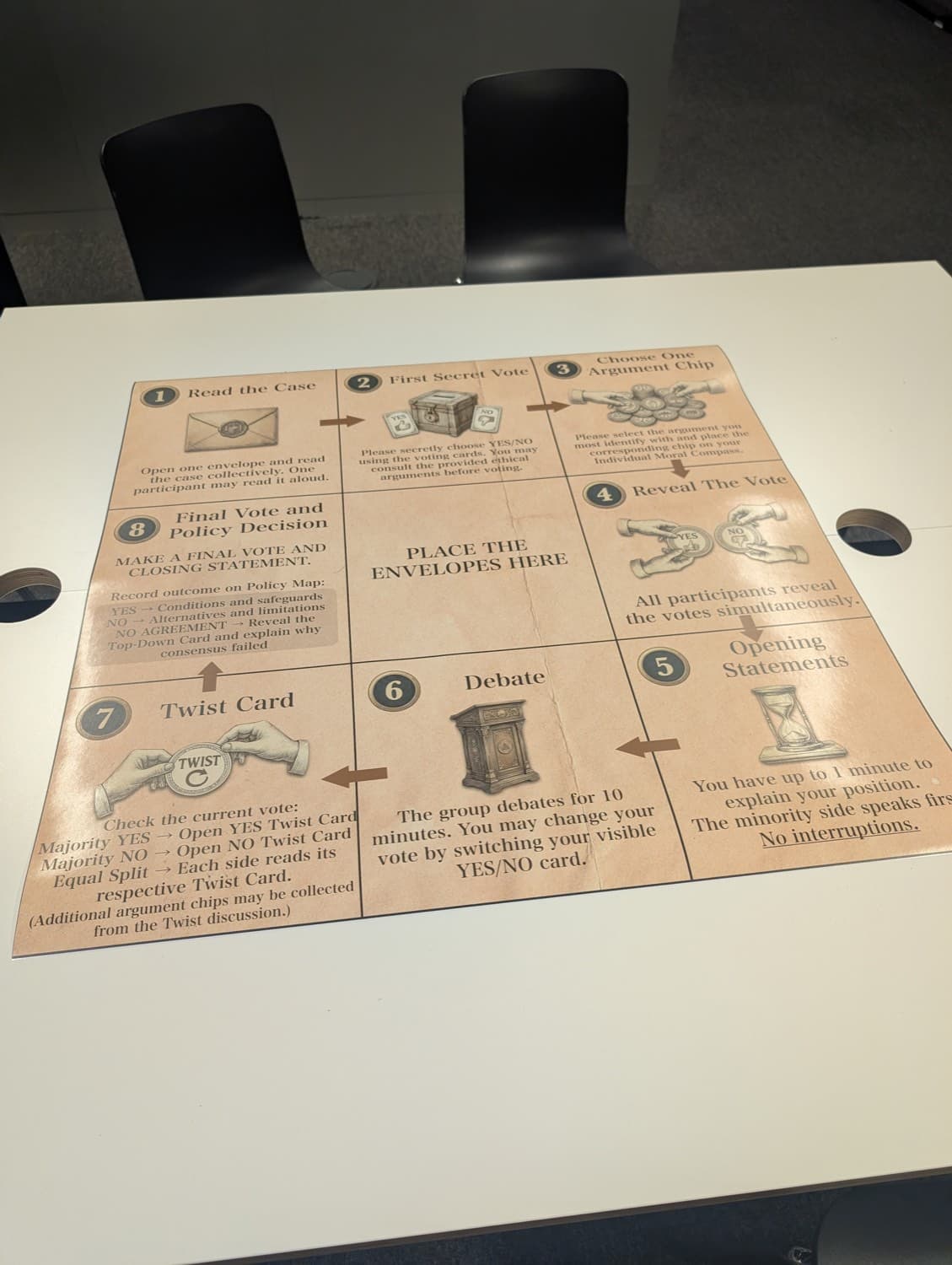
ethixCube turns an ethical dilemma into a structured conversation. It makes reasoning visible without ranking people or forcing agreement.
1. Dilemma
Participants encounter a realistic decision in which values, duties, risks and responsibilities conflict.
2. Independent judgement
Everyone votes privately and identifies the reason closest to their position. This reduces pressure to follow the loudest or most senior voice.
3. Structured dialogue
Participants explain their choices, hear minority views, question assumptions and compare the ethical lenses behind different positions.
4. The twist
New information changes the context. Participants decide again and see what changed, what held firm and why.
5. Shared reflection
The group captures areas of alignment, continuing disagreement, practical safeguards, key conditions and questions requiring further attention.
ethixCube does not force consensus. Disagreement can be the most useful result when people understand its source and know what the organisation must examine next.
Three ways of approaching an ethical decision.
Most people use all three lenses. The Ethics Profile shows which patterns appeared most often in a particular run.

Outcomes and impact
What are the likely consequences? Who benefits or bears the cost? Which option produces the best overall outcome?

Principles and duties
What is owed to others? Which rights, rules or obligations should guide the decision, even when compromise is convenient?

Character and relationships
What would a person or organisation of integrity do? How will the choice affect trust, care and the kind of culture being created?
The lenses support reflection. They are not scores, rankings or fixed personality types.
Analogue, digital or blended.
Analogue
In the analogue version, participants use physical cards, vote cards, cubes and a shared board. Each table has its own discussion, supported by a facilitator.
Digital
In the digital version, participants respond through a browser while the facilitator manages the shared session. It supports online delivery and larger groups, with further reporting features in development.
Blended
A blended session combines in-person dialogue with digital participation or results. Use this for multi-table events, conferences and geographically distributed organisations.
What participants and organisations take away.
A personal Ethics Profile based on the reasoning selected during the session, together with a record of any changes after new information.
A clearer view of where perspectives align, where they differ and which experiences or assumptions shape those differences.
A summary of priorities, conditions, safeguards and unresolved questions raised by participants. Scope and reporting should be agreed before the workshop.
Take the method into your organisation.
Six workshop formats, from a leadership session to a multi-table event, with ready-made or tailored dilemmas.